
Our Blog
Professional information for a healthier family.
Professional Lice Removal: Tips & Best Practices
Health, Lice Removal, Professional Practice
Professional Lice Removal: Practical Tips and Best Practices
Head lice are common, persistent, and often emotionally charged for families. When you’re searching for help, it’s important to know how to recognize a skilled, trustworthy lice professional. This guide reframes professional best practices into clear criteria you can use to choose the right provider—so your family receives safe, effective, and reassuring care.
Foundational Lice Removal Tips for Professionals
Effective lice removal begins with a structured, repeatable approach. As a consumer, you’ll want to choose a provider who follows clear steps and can explain what they’re doing and why. Use the points below as a checklist when you’re asking questions or reading about a clinic’s methods.
Conduct a clear visual assessment. Before any treatment, part the hair in small sections from scalp to ends, focusing on warm areas such as behind the ears and at the nape of the neck. Confirm the presence of live lice and attached nits so you can explain findings confidently to clients or parents. When choosing a professional, look for someone who offers a documented head check and is willing to show you what they see in a calm, respectful way.
Use a professional‑grade lice comb. Fine‑toothed metal combs with tightly spaced teeth are essential. Comb systematically from scalp to tip on damp or conditioned hair, wiping the comb on a white tissue or towel after each pass to monitor progress and demonstrate removal to the client. Ask what type of comb they use and how they show you progress during the visit.
Work in small, controlled sections. Clip hair into quadrants and further divide as needed. This minimizes missed areas and allows you to document which sections have been fully treated, improving both accuracy and efficiency. A reliable provider will describe a step‑by‑step sectioning process rather than “quick comb‑throughs.”
Combine physical removal with approved products when appropriate. Depending on local guidelines and your scope of practice, you may recommend or apply approved lice treatment products. Always pair them with meticulous combing; products alone rarely achieve complete removal. When evaluating a service, be cautious of anyone who relies only on a product or “miracle spray” without detailed combing.
💡 Consumer Tip: During a phone call or consultation, ask the provider to walk you through their full process from assessment to final comb‑through. Clear, confident explanations are a strong sign of professionalism.
Best Practices for Safe, Consistent Lice Treatment
Beyond technique, strong professional practice standards protect both clients and practitioners. As you compare options, look for lice removal services that emphasize hygiene, safety, and clear communication. These best practices can guide your questions and help you feel confident in your choice.
Hygiene, Safety, and Environment
Maintain strict tool hygiene. Disinfect combs, clips, and reusable tools between clients according to manufacturer instructions and local health regulations. Use disposable materials (such as capes or towels) when possible to reduce cross‑contamination risk. When choosing a provider, ask how they clean tools and how they prevent lice from spreading between clients.
Protect both client and practitioner. Wear gloves, secure long hair, and ensure seating and lighting promote proper posture and visibility. A clean, neutral‑toned treatment area reinforces professionalism and client confidence. When you enter the space, notice: Does it look tidy, well‑lit, and comfortable for children and adults?
Follow evidence‑based environmental guidance. Educate families that lice survive briefly off the scalp. Recommend simple, realistic steps such as washing recently used bedding and hats on a warm cycle, and avoiding unnecessary deep cleaning that adds stress without improving outcomes. A trustworthy professional won’t pressure you into buying expensive sprays or extreme cleaning services; they’ll focus on simple, science‑based advice.
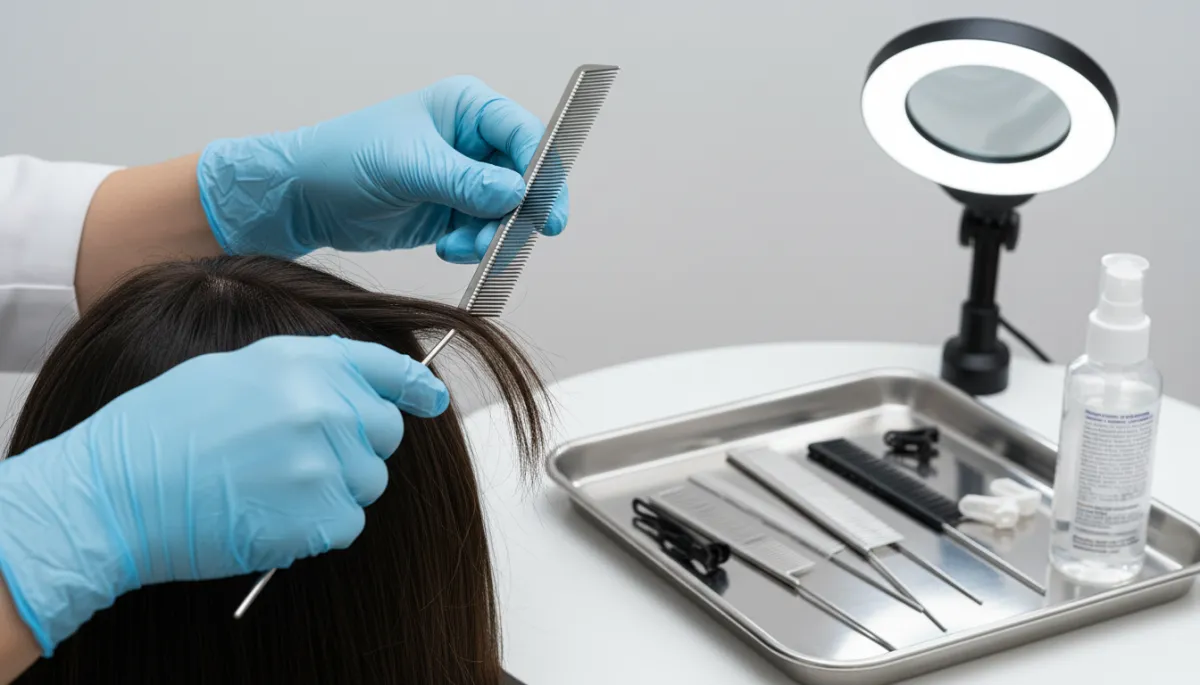
Organized tools and precise combing technique are central to reliable lice removal results.
Communication, Education, and Follow‑Up
Set clear expectations from the outset. Explain the process, estimated duration, and the likelihood of follow‑up sessions. Clarify that success depends on both in‑clinic work and at‑home compliance with aftercare instructions. Look for providers who share pricing, timing, and follow‑up needs upfront—no surprises.
Provide simple, written aftercare guidance. Offer step‑by‑step instructions for checking at home, recommended combing intervals, and when to return for re‑evaluation. Written materials help families stay consistent once they leave your care. Ask if you’ll receive a printed or digital aftercare plan you can refer to later.
Address myths respectfully. Clarify that lice are not a sign of poor hygiene and can affect any household. Professional, non‑judgmental language reduces stigma and encourages clients to seek help early if reinfestation occurs. Notice whether staff speak about lice in a calm, non‑shaming way—especially around children.
📌 Key Takeaway: A good lice professional doesn’t just “do a treatment.” They also educate, reassure, and partner with your family so you know exactly what to do once you go home.
Building a Reliable, Client‑Centered Lice Service
For professionals, excellence in lice removal is more than eliminating parasites. It involves consistent technique, rigorous hygiene, thoughtful education, and calm, respectful communication. For you as a consumer, these same elements become a practical checklist for choosing where to go. Look for structured methods, visible cleanliness, clear explanations, written aftercare, and a kind, non‑judgmental attitude. When a provider meets these standards, you can feel more confident that your family will receive safer treatments, reduced reinfestation risk, and the reassurance you need during a stressful experience.